How to Run a Product Discovery Sprint
Learn how to execute a high-impact Product Discovery Sprint. A practical guide for Indian tech leaders to validate ideas and reduce engineering waste.
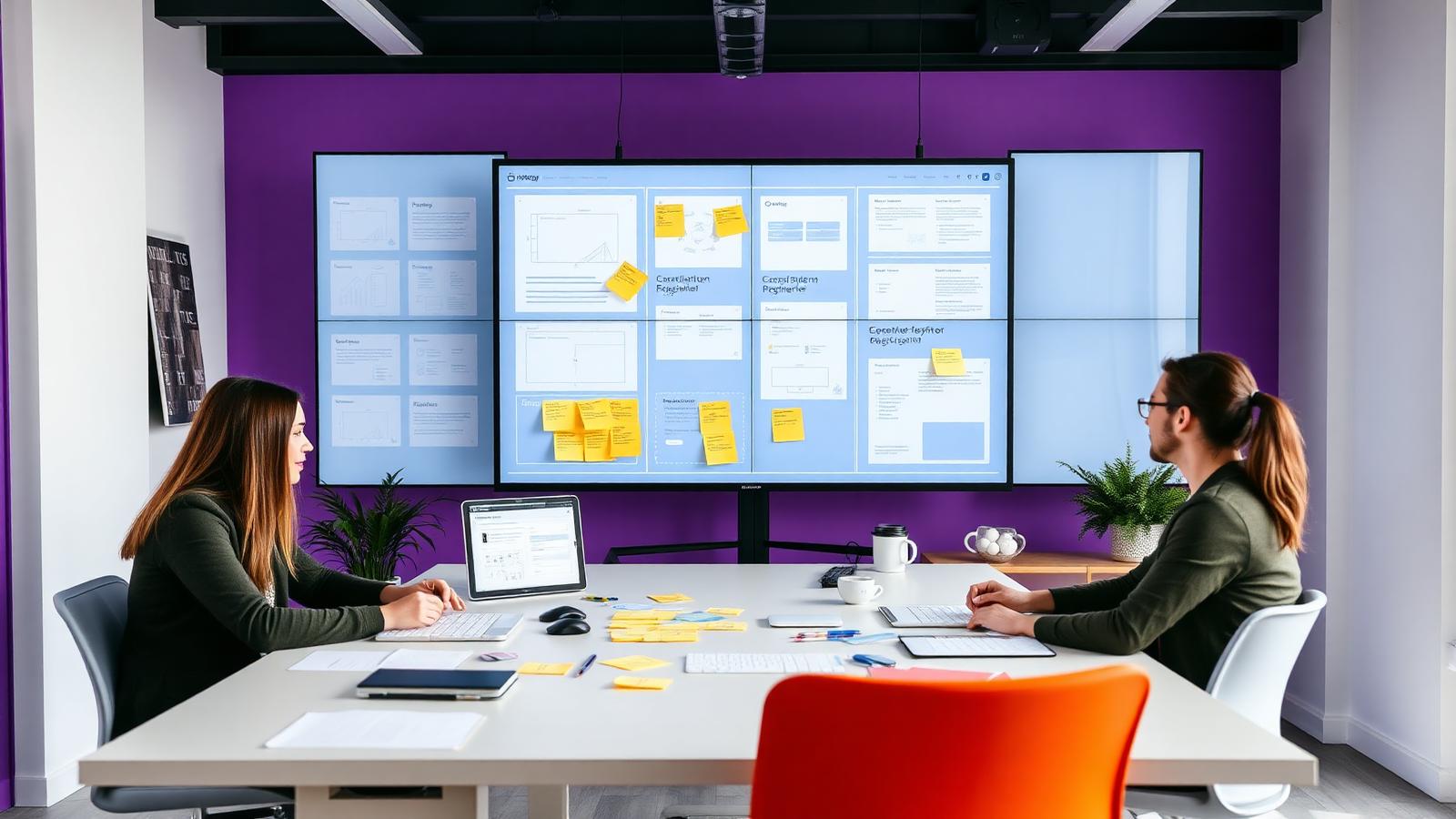
Product discovery is the process of deciding what to build, rather than how to build it. In many Indian tech environments, teams often rush into development to meet aggressive quarterly targets, only to find that the resulting feature doesn't move the needle on user retention or revenue. A Product Discovery Sprint is a time-boxed, intensive framework designed to validate assumptions and de-risk a product idea before a single line of production code is written.
At DPJ Hub, we advocate for a structured approach that bridges the gap between a raw business idea and a high-fidelity prototype. This prevents 'feature factory' syndrome—where engineering teams are busy but not productive. The following guide outlines a five-day intensive sprint adapted for cross-functional teams looking to ship products that actually solve market problems.
Assembling the Sprint Team
A sprint is only as effective as the people in the room. For an Indian startup or enterprise unit, you need a mix of local market context and technical feasibility. The ideal team consists of five to seven people:
- The Decider: Usually a Product Manager or Founder who has the final say on trade-offs.
- The Facilitator: Someone to keep time and manage the process (often a Lead Designer).
- The Customer Advocate: A Sales or Customer Success lead who understands the specific pain points of the Indian user base.
- The Builder: A Senior Engineer who can provide reality checks on technical constraints.
- The Visualiser: A Product Designer who can turn abstract ideas into tangible interfaces.
Phase 1: Mapping and Defining the Problem
The first day is dedicated to alignment. Most product failures stem from team members having different mental models of the problem. You must start by interviewing internal stakeholders and reviewing existing data.
In the Indian context, this often means looking at regional nuances—such as whether the product needs to work on low-bandwidth networks or if the UI needs to accommodate multi-lingual support. Define a 'Sprint Goal' (e.g., "Can we make the digital KYC process take less than two minutes?") and map out the user journey. Identify the 'Target'—the specific moment in the journey that is most broken or holds the most potential for growth.
Phase 2: Ideation and Solution Sketching
On the second day, shift from the problem to the solution. We avoid traditional brainstorming, which often leads to groupthink. Instead, we use 'Working Alone Together.' Each team member sketches their own solutions in detail.
We recommend the 'Crazy 8s' exercise: fold a piece of paper into eight sections and draw eight different iterations of a key screen in eight minutes. This forces the brain to move past the first, most obvious idea. By the end of this phase, everyone should have a detailed three-panel storyboard showing how a user interacts with their proposed solution.
Phase 3: The Decision Matrix
By day three, you will likely have several competing ideas. The goal is not to pick the 'best' person's idea, but to identify the best elements across all sketches.
- Heat Map: Team members place dots on the parts of the sketches they find most compelling.
- Speed Critique: The Facilitator walks through each sketch, highlighting the standout features identified by the heat map.
- Straw Poll: Each member chooses their favourite solution.
- Supervote: The Decider makes the final call on which solution (or combination of solutions) will move to the prototyping phase.
Once the direction is set, create a step-by-step storyboard for the prototype. This acts as the blueprint for the next day, ensuring the designers and engineers are perfectly synced.
Phase 4: High-Fidelity Prototyping
Day four is about 'Goldilocks quality'—creating a prototype that has just enough detail to look real to a user, but not so much that you waste days on polish. Use tools like Figma or Adobe XD to build a clickable flow.
For products targeting the Indian market, ensure your prototype accounts for mobile-first interactions. If the solution involves a service or a physical delivery, the prototype might include mock SMS notifications or a physical mock-up of the packaging. The key is to simulate the experience so that the user's reaction is authentic, not hypothetical.
Phase 5: User Validation and Synthesis
The final day is the moment of truth. You must put your prototype in front of five real users. Research shows that five interviews are typically enough to identify 80% of usability issues and conceptual flaws.
How to conduct the validation session:
- Avoid leading questions: Don't ask "Do you like this feature?" Instead, ask "Walk me through how you would complete this task."
- Watch for friction: Note where the user pauses, looks confused, or attempts to click something that isn't interactive.
- Look for patterns: If four out of five users get stuck at the payment gateway selection, you have a clear answer on what needs to be redesigned.
By Friday evening, you will have a validated (or invalidated) concept. You will know whether to move into full-scale development, pivot the idea, or scrap it entirely before spending lakhs on engineering hours.
Actionable Steps for This Week
You don't need a full five days to start implementing discovery principles. If you are starting a new feature today, follow these three steps:
- Write the 'Press Release': Write a one-page document describing the feature as if it just launched. If the benefit to the user isn't crystal clear on paper, it won't be clear in the app.
- Audit the Data: Look at your Mixpanel or Google Analytics. Where is the highest drop-off rate in your current flow? Focus your discovery efforts there.
- Recruit Five Customers: Reach out to five active users today and schedule 30-minute calls for Friday. Having these sessions on the calendar forces the team to have something ready to show.
Working with DPJ Hub
DPJ Hub helps businesses navigate complex product journeys through our integrated product design and software engineering services. Our teams specialise in taking ideas from the discovery phase through to full-scale deployment, ensuring technical feasibility is baked into every design decision. Whether you are a startup looking for a Minimum Viable Product or an enterprise modernising your stack, we provide the talent and strategic oversight to build products that scale.
Contact DPJ Hub today to discuss how our product discovery and development teams can accelerate your roadmap.
Related reading
UX Research on a Startup Budget
Learn how to conduct high-impact UX research on a startup budget. Practical, low-cost strategies for Indian startups to validate products without a lab.
Design Systems: When You Need One and How to Start
Learn when to transition from a UI kit to a full Design System. A practical guide for Indian startups and enterprises to scale product design efficiently.
Turning User Feedback into a Credible Product Roadmap
Learn how to transform raw user feedback into a high-impact product roadmap using practical prioritization frameworks and data-driven design strategies.